
“The pandemic (a geographically widespread or global infection in people) appeared in all but the remotest places on Earth, causing symptomatic disease in at least one-third of the world’s population. Whereas most sick persons had self-limiting influenza, indistinguishable from influenza as seen today, an unexpectedly high number went on to die of pneumonia. U.S. case fatality ratios were approximately 0.5 to 1%, but case fatality was much higher in many developing countries and in many crowded environments, from urban slums to Western military training camps. The global mortality will never be known with certainty, but estimates range from 50 million to as high as 100 million in the first pandemic year.”
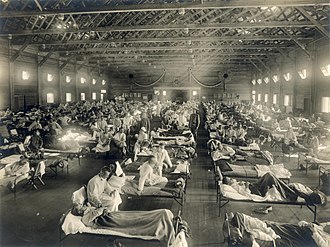
“Combating a disease of unknown cause is a daunting task. One hundred years ago, a pandemic of poorly understood etiology and transmissibility spread worldwide, causing an estimated 50 million deaths. ...”
Spanish flu
“The 1918 influenza pandemic was the most severe pandemic in recent history. It was caused by an H1N1 virus with genes of avian origin. Although there is not universal consensus regarding where the vir...”
Spanish flu
“While the 1918 H1N1 virus has been synthesized and evaluated, the properties that made it so devastating are not well understood. With no vaccine to protect against influenza infection and no antibiot...”
Spanish flu
“In India, during the 1918 influenza pandemic, a staggering 12 to 13 million people died, the vast majority between the months of September and December. According to an eyewitness, “There was none to ...”
Spanish flu
“The small town of Gunnison, Colorado, lies at the bottom of the valley carved by the Gunnison River into the Rocky Mountains. It is now crossed by the Colorado stretch of U.S. Highway 50, but in 1918 ...”
Spanish flu