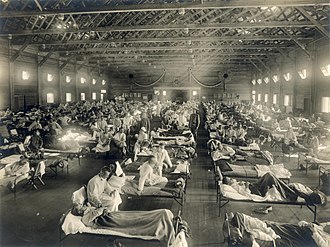
“The small town of Gunnison, Colorado, lies at the bottom of the valley carved by the Gunnison River into the Rocky Mountains. It is now crossed by the Colorado stretch of U.S. Highway 50, but in 1918 the town was mainly supplied by train and two at best mediocre roads. When the 1918–19 influenza pandemic reached Colorado as an un- welcome stowaway on a train carrying servicemen from Montana to Boulder, the town of Gunnison took decisive action. As the November 1, 1918, edition of the Gunnison News-Champion documents, a Dr. Rockefeller from the nearby town of Crested Butte was “given entire charge of both towns and county to enforce a quarantine against all the world”. He instituted a strict reverse quarantine regime that almost en- tirely isolated Gunnison from the rest of the world. Gunnison became one of the few communities that largely escaped the ravages of the influenza pandemic, at least in the beginning. In an instructive example of the limited human patience for the social, psychological, and economic disruption of quarantine, adherence eventually waned, and the front page of the Gunnison News-Champion’s March 14, 1919, issue reports that the influenza pandemic got to Gunnison, too Nevertheless, Gunni- son had a very lucky escape, of a population of over 6900 (including the county), there were only a few cases and a single death.”