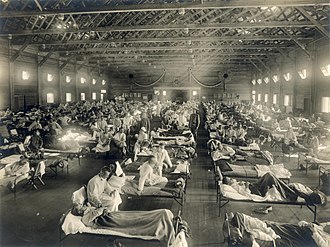
“The virulence of the 1918 H1N1 virus intensified the situation. Epidemiologic parameters of the 1918 pandemic, which include an attack rate of 28% and an estimated basic reproduction number of 1.8, were similar in subsequent influenza pandemics of 1957 and 1968. However, the estimated case fatality proportion of 1.7% in the 1918 pandemic was more than 10 times higher than in the 1957 and 1968 pandemics. Pandemic influenza in 1918 often presented with an unusually severe and swift clinical course. Disease frequently progressed to extensive organ involvement, primary viral pneumonia, and secondary bacterial pneumonia and empyema. Some military physicians reported a rapid clinical course, with death occurring within 24–48 hours after hospital admission. Pneumonia was the cause of death for the vast majority of the deceased. The unprecedented death rate exceeded the capacity of many morgues and funeral homes, and bodies were often “stacked like cord wood” in the halls of both military and civilian hospitals. Ultimately, the death toll, particularly among previously healthy young adults, reduced life expectancy in the United States by 12 years.”