
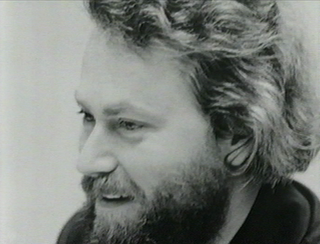
Donald Judd
36 quotes
Biography
Donald Clarence Judd was an American artist associated with minimalism. In his work, Judd sought autonomy and clarity for the constructed object and the space created by it, ultimately achieving a rigorously democratic presentation without compositional hierarchy.
"Most art is fragile and some should be placed and never moved away."
"The main qualifications to the lesser position of painting is that advances in art are certainly not always formal ones."
"ARTS is a somewhat conservative magazine but it is not uniformly, simply or blindly conservative, and the several conservative writers vary. And I am certainly not a conservative and neither is Miss Harrison. I decidedly disagree with the basic positions of Mr. Kramer, Miss Raynor and Mr. Tillim, though not with some of their evaluations, both of conservative and nonconservative artists. I think Ben Johnson's paintings, for example, are relatively uninteresting and powerless and that the work of some of the dop artists is full of true emotion.uninteresting and powerless and that the work of some of the dop artists is full of true emotion. The conservatism of Mr. Kramer and Mr. Mellow as successive editors lies only in the publication of more articles on conservative artists than on unconservative ones. Neither editors ever suggested to me that the magazine should have a uniform position or attempt to control my reviews, which are often contrary to Mr. Kramer’s opinions."
"Any combining, mixing, adding, diluting, exploiting, vulgarizing, or popularizing of abstract art deprives art of its essence and depraves the artist's artistic consciousness. Art is free, but it is not a free-for-all. The one struggle in art is the struggle of artists against artists, of artist against artist, of the artist-as-artist within and against the artist-as- man, -animal, or -vegetable. Artists who claim their artwork comes from nature, life, reality, earth or heaven, as 'mirrors of the soul' or 'reflections of conditions' or 'instruments of the universe', who cook up 'new images of man' - figures and 'nature-in-abstraction' - pictures, are subjectively and objectively, rascals or rustics."
"Four years ago almost all of the applauded and selling art was New York School painting. It was preponderant in most galleries, which were uninclined to show anything new. The publications which praised it praised it indiscriminately and were uninterested in new developments. Much of the painting was by the "second generation" many of them epigones. Pollock was dead. Kline and Brooks had painted their last good paintings in 1956 and 1957. Guston's paintings had become soft and gray — his best ones are those around 1954 and 1955. Motherwell's and De Kooning's paintings were somewhat vague. None of these artists were criticized. In 1959 Newman's work was all right, and Rothko's was even better than before. Presumably, though none were shown in New York, Clyfford Still's paintings were all right. This lackadaisical situation was thought perfect. The lesser lights and some of their admirers were incongruously dogmatic : this painting was not only doing well but was the only art for the time. They thought it was a style. By now, it is."
"The history of art and art’s condition at any time are pretty messy. They should stay that way. One can think about them as much as one likes, but they won’t become neater; neatness isn’t even a very good reason for thinking about them. A lot of things just can’t be connected."
"Usually when someone says a thing is too simple they're saying that certain familiar things aren't there, and they're seeing a couple maybe that are left... But actually there may be... several new things to which they aren't paying attention. These may be quite complex... They may [also] be read all at once. This is important to most of the best work going on now. It has to have a wholeness to it that previous work didn't have, but still, within that, it's not all as simple as [people] say."
"Everything sculpture has, my work doesn’t."
"I wanted work that didn't involve incredible assumptions about everything. I couldn't begin to think about the order of the universe or, the nature of American society. I didn't want work that was general or universal in the usual sense. I didn't want it to claim too much. Obviously the means and the structure couldn't be separate and couldn't even be thought of as two things joined. Neither word meant anything. A shape, a volume, a color, a surface is something itself. It shouldn't be concealed as part of a fairly different whole. The shapes and materials shouldn't be altered by their context."
"The main virtue of geometric shapes is that they aren't organic, as all art otherwise is. A form that's neither geometric or organic would be a great discovery."
"I object to several popular ideas. I don't think anyone's work is reductive. The most the term can mean is that new work doesn't have what the old work had. Its not so definitive that a certain kind of form is missing; a description and discussion of the kind present is pretty definitive."
"Obviously everyone is going to prefer kinds of art. I prefer art that isn't associated with anything and am tired of the various kinds of dada, and don't think, for example, that the work of Johns and Rauschenberg is so momentous. But it's good and I'm not at all inclined to rank them below every last abstract artist. And I know that their work has connections to so-called abstract work. (I don't like the word 'abstract'.) Or, I think American art is far better than that anywhere else but I don't think that situation is desirable. ** Donald Judd, in: Studio International, vol. 177, p. 182: As quoted in: James Meyer (2000) Minimalism. Vol 60 - 83, p. 245"
"Half or more of the best new work in the last few years has been neither painting nor sculpture. Usually it has been related, closely or distantly, to one or the other. The work is diverse, and much in it that is not in painting and sculpture is also diverse. But there are some things that occur nearly in common."
"The new work obviously resembles sculpture more than it does painting, but it is nearer to painting."
"A work can be as powerful as it can be thought to be. Actual space is intrinsically more powerful and specific than paint on a flat surface."
"A work needs only to be interesting. Most works finally have one quality. In earlier art the complexity was displayed and built the quality. In recent painting the complexity was in the format and the few main shapes, which had been made according to various interests and problems. A painting by Newman is finally no simpler than one by Cezanne. In the three-dimensional work the whole thing is made according to complex purposes, and these are not scattered but asserted by one form. It isn't necessary for a work to have a lot of things to look at, to compare, to analyze one by one, to contemplate. The thing as a whole, its quality as a whole, is what is interesting. The main things are alone and are more intense, clear and powerful."
"I am not interested in the kind of expression that you have when you paint a painting with brush strokes. It's all right, but it's already done and I want to do something new. I didn't want to get into something which is played out and narrow. I want to do as I like, invent my own interests. Of course, that doesn't mean that people who, like Newman, still paint are worn out. But I think that's a particular kind of experience involving a certain immediacy between you and the canvass, you and the particular kind of experience of that particular moment. I think what I'm trying to deal with is something more long range than that in a way, more obscure perhaps, more involved with things that happen over a longer time perhaps. At least it's another area of experience."
"I think most of the art now is involved with a denial of any kind of absolute morality, or general morality. I think most of us in one way or another are involved in ideas of a fairly loose world, however it's expressed, whether obviously as in Chamberlain or just accidentally, or, oh, like Newman."
"In any art there are a lot of technical things that you can get to like. Building is just skilled labor, I suppose. It's a lot of work. I don't mind other people building them, but the way things go together and are made is interesting to me; I like that a lot. I pay a lot of attention to how things are done and the whole activity of building something is interesting."
"At that second exhibition I had to peer into them and look through the grayed color and wonder what it would be like not gray and then wonder what the forms would be like not crabbed by the figures and trees."
"Since I leapt into the world an empiricist, ideality was not a quality I wanted."
"To begin again at the beginning in a proper philosophical manner, one person is a unity, and somehow, after the long complex process, a work of art is a similar unity. But the person is fairly unintelligible and the art is intelligible. Primarily what is intelligible is the nature of the artist, either of the past or now. The interests, thought and quality of the artist make the final total quality of the work."
"The better artists are original and obdurate; they're the gravel in the pea soup. ln Jackson Pollock's painting the particularity, the immediacy, is the dripped paint, which remains dripped paint as a phenomenon, for all the beauty of the small shapes it makes it makes. The generality is in the scale or proportion and in the large shapes. It’s in the appearance of chaos. The gesture or the motion shown in the application of the paint varies from painting to painting from the particular to a middling generality. The size and the color generally occur in the middle between particularity and generality. At the same time as Pollock and since, almost all first-rate art has been based on an immediate phenomenon, for example the work of Dan Flavin and Larry Bell."
"It takes a great deal of time and thought to install work carefully. This should not always be thrown away. Most art is fragile and some should be placed and never moved again. Some work is too large, complex and expensive to move. Somewhere a portion of contemporary art has to exist as an example of what the art and its context were meant to be."
"I object very much when my work is said to not be political, because my feelings about the social system are in there somewhere. The idea is to have it all in there together—you can’t pull it out."